Projects
43
43 tracked launches with Sobha.
Developer Profile
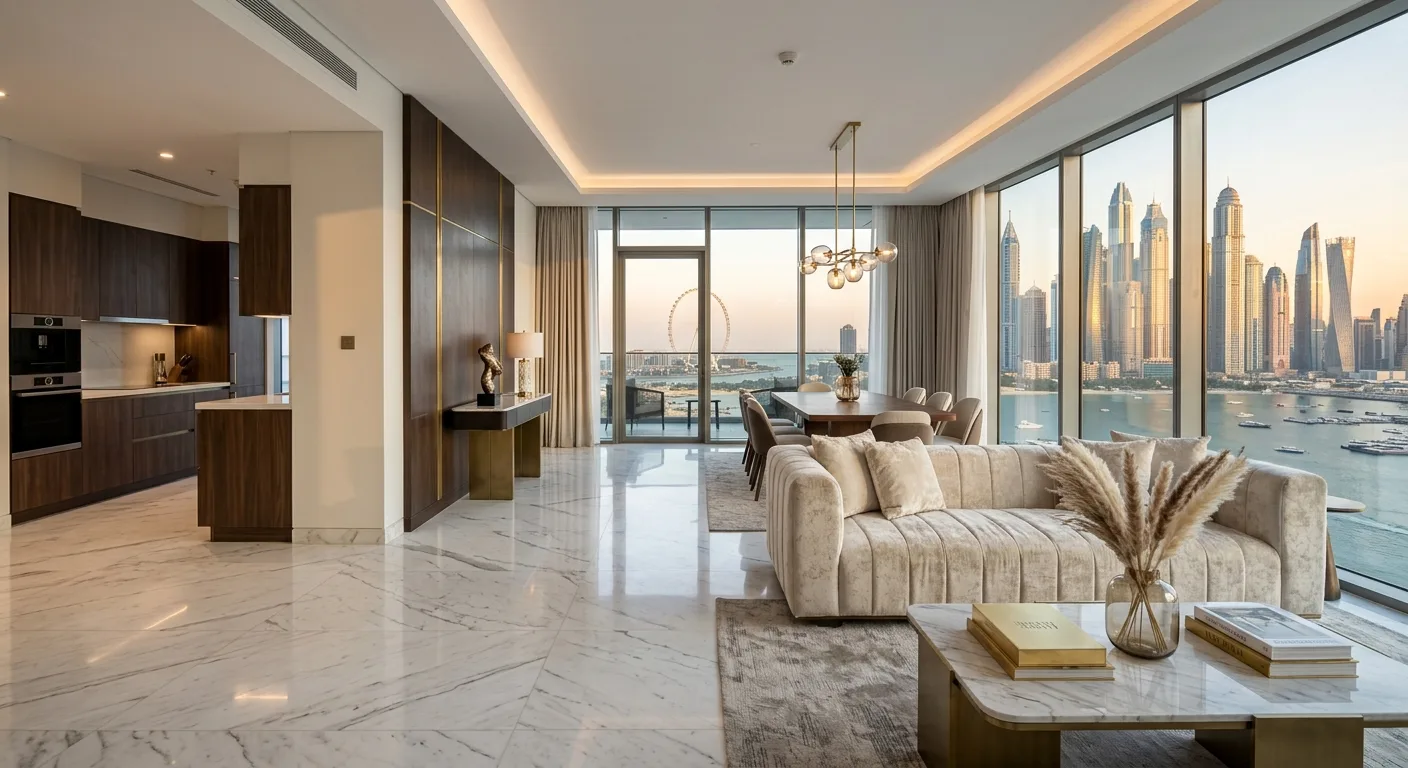
Sobha Realty runs 43 active projects across 10 Dubai districts, from AED 1.04 million apartments in Motor City to AED 9.
What the current data says
Developer shortlist
Need the best-fit launches from this developer?
Data coverage
We publish what our pipeline can verify today. Gaps below are on the backlog.
Projects
43
43 tracked launches with Sobha.
Areas
10
Active across 10 Dubai areas.
Price from
Price on request
Lowest tracked entry price from Sobha.
Sobha Realty operates 43 tracked projects across 10 active districts in Dubai, making it one of the most geographically distributed premium developers currently selling off-plan. The strongest current concentration sits in Sobha Hartland 2, Jabal Ali First, and Al Yufrah 1, with additional active supply in Dubailand, Sheikh Zayed Road, Motor City, and Dubai Harbour. Entry pricing across the live portfolio starts below AED 1.1 million for Motor City apartments and scales past AED 9 million for six-bedroom villas in Sobha Sanctuary. Sobha suits buyers who prioritise integrated build quality and delivery accountability over headline discounts, and investors targeting Dubailand yields in the 6–8% range driven by proximity to the Al Maktoum Airport expansion corridor. fees run 5–6% across the active portfolio, consistent with Dubai's premium off-plan tier.
Sobha Realty was established in Dubai in 2003 by PNC Menon, built on an integrated development model that controls design, construction, MEP, and finishing under a single entity. That structure is uncommon among Dubai's off-plan developers: most outsource civil works and interiors to separate contractors, introducing quality variation between the show unit and the delivered product. Sobha internalises those functions, and the outcome is visible in Sobha Hartland — the developer's flagship masterplan in MBR City — where multi-phase delivery over a decade produced consistent finishing benchmarks and post-handover resale premiums that sustained buyer confidence across the entire precinct.
Across Dubai developers, Sobha's 43 tracked live projects represent one of the broader active pipelines in the premium segment. The portfolio spans villa and townhouse communities (Sanctuary, Reserve, Elwood in Dubailand), high-rise residential towers (Hartland 2, Seahaven at Dubai Harbour, Central on Sheikh Zayed Road), and apartment clusters in established mid-market zones (Solis in Motor City). Key proof points for the selection: 43 active projects, supply concentrated across 10 distinct areas, fees running 5–6%, and a demonstrated delivery record in Sobha Hartland that sets the quality baseline for everything currently under construction.
Sobha's live supply is heaviest in three districts: Sobha Hartland 2 in Bukadra within the MBR City corridor, Jabal Ali First, and Al Yufrah 1. Sobha Hartland 2 functions as the continuation of the original Hartland masterplan, positioned within the Meydan zone with access to GEMS schools, the Meydan racecourse, and the Ras Al Khor Wildlife Sanctuary view corridor. Tower products here — Green Vistas and Skyvue — price from AED 1.4–1.7 million and attract both investors and end-users seeking MBR City exposure without the Downtown land premium.
In Dubailand, Sobha Sanctuary consolidates the developer's villa and townhouse offer across The Willows, The Green, The Brooks, The Grove, and The Greens sub-phases. Sanctuary benefits directly from the Al Maktoum Airport expansion, which is redirecting long-term capital toward the western Dubai Land corridor. Yields in Dubailand have tracked 6–8%, supported by family rental demand in the new airport catchment.
Beyond those core zones, Sobha Central on Sheikh Zayed Road — a 95-floor mixed-use tower — targets the SZR and JLT commuter market. Sobha Solis in Motor City addresses buyers seeking lower entry points in an established suburban precinct. Sobha Seahaven at Dubai Harbour serves buyers prioritising marina frontage and the Palm Jumeirah view axis. Each district serves a distinct buyer profile: Hartland 2 for family liquidity, Sanctuary for long-hold villa investors, Central for SZR income plays, Solis for first-entry luxury apartments under AED 1.1 million.
Sobha's current live launches span a pricing band wide enough to cover three distinct buyer profiles. At the lower end, Sobha Solis in Motor City opens at approximately AED 1.04 million for one-to-three-bedroom apartments on a 60/40 payment plan, with construction at early-stage progress as of early 2026. In Sobha Hartland 2, Skyvue prices from AED 1.4 million and Green Vistas from AED 1.7 million, both on 60/40 structures.
The villa tier begins in earnest at Sobha Sanctuary. Sobha Sanctuary The Willows offers one-bedroom villas from AED 3.99 million on a 10/50/40 plan — the lightest booking deposit in the current Sanctuary lineup and the recommended first project to review if Dubailand villas are on the selection. Sobha Sanctuary Phase 1 The Green and Sobha Sanctuary Phase 1 The Brooks sit in the same AED 3.99 million entry range for four-to-five-bedroom configurations. At the top of the current Sanctuary range, The Grove prices six-bedroom villas from AED 9.32 million on a 20/40/40 plan.
On Sheikh Zayed Road, Sobha Central The Mirage starts from AED 2.01 million for one-bedroom apartments. Sobha Seahaven at Dubai Harbour prices from approximately AED 4 million for marina-facing product with a December 2026 estimated handover — the shortest remaining construction window in the active lineup.
Buyers evaluating property investment in Dubai for foreigners should note that Sobha's projects in Hartland 2, Sanctuary, and Seahaven are designated freehold zones qualifying for foreign ownership. Confirm DLD escrow registration and RERA permit status for each specific project before executing.
Sobha's active delivery schedule spans three windows across the current pipeline. The nearest-term completion is Sobha Seahaven at Dubai Harbour, carrying an estimated handover of December 2026 — the shortest remaining construction timeline in the portfolio and the most liquid option for investors seeking faster rental activation or exit.
Mid-term handovers centre on Sobha Sanctuary in Dubailand, where active phases are tracking toward Q4 2028. Projects in Jabal Ali First and Al Yufrah 1 align broadly within this window depending on phase sequencing. Buyers entering Sanctuary now are purchasing into a precinct where the first sub-phases will be delivered and occupied before their unit completes, which reduces the void-period risk typical of early-stage masterplan launches.
Longer-dated completions include Sobha Central on Sheikh Zayed Road, with Phase 2 targeting December 2029. The extended timeline reflects the structural complexity of a 95-floor mixed-use tower rather than a project risk signal, but buyers should model a minimum four-year capital hold before rental income or resale. Sobha Solis in Motor City is at 4% construction progress as of early 2026, placing handover several years out and suiting investors comfortable with an early-entry pricing advantage in exchange for a longer construction period.
All Sobha off-plan projects in Dubai are legally required under UAE regulations to maintain DLD-regulated escrow accounts, with construction drawdowns tied to verified milestone completion. Request the DLD escrow registration number and RERA permit for each project before signing a Sales and Purchase Agreement.
Sobha and Azizi occupy structurally different positions in Dubai's off-plan market. For a full side-by-side breakdown, see Azizi vs Sobha.
Sobha's primary competitive advantage is its integrated delivery model. By controlling design, civil construction, MEP, and finishing in-house, Sobha compresses the gap between show unit quality and delivered unit quality — the most common source of buyer disappointment in Dubai's off-plan segment where third-party contracting introduces inconsistency. The Sobha Hartland delivery record supports this: above-average finishing benchmarks and post-handover resale premiums across multiple phases over a decade.
Azizi competes on volume and price accessibility. Its portfolio is broader in geographic distribution and stronger at entry-level price points in areas like Al Furjan and Meydan. Azizi projects typically carry lower per-square-foot acquisition costs, making them more attractive to investors optimising for gross yield over long-hold capital growth.
The decision framework: Sobha is the stronger choice when end-user quality, resale liquidity within established precincts, and long-hold capital growth are the primary investment criteria. Azizi is more competitive when entry price and volume-driven yield are the primary criteria. Apartment investors targeting the AED 1–2 million bracket will find Azizi's pipeline broader; villa and townhouse buyers in the AED 4–10 million range will find Sobha's Sanctuary and Reserve products more directly relevant.
Both developers are active in Jabal Ali First, creating a direct district-level comparison for buyers evaluating that corridor. Sobha's Al Yufrah 1 exposure adds further differentiation in the western Dubai Land zone where the Al Maktoum Airport expansion is concentrating long-term capital.
Sobha's active pipeline runs several distinct payment structures depending on project and phase. Sobha Solis in Motor City operates on a 60/40 plan with construction at early-stage progress as of early 2026. Sobha Sanctuary The Willows uses a 10/50/40 structure — 10% on booking, 50% during construction, 40% on handover — which is among the lowest booking deposits in the current Dubailand villa segment. Sobha Sanctuary The Grove applies a 20/40/40 plan on its six-bedroom configurations. Sobha Hartland 2 products including Skyvue and Green Vistas also run 60/40 plans. Payment terms are updated by project phase, so confirm current availability directly with Sobha Realty before signing a Sales and Purchase Agreement.
Sobha Realty and Sobha Ltd are legally and operationally separate entities. Sobha Realty is headquartered in Dubai and operates exclusively in the UAE market, founded by PNC Menon in 2003. Sobha Ltd is an India-listed developer. The two companies share founding family lineage but are independent organisations with separate capital structures, governance, and project pipelines. All Sobha Realty projects in Dubai are registered with the Dubai Land Department and subject to UAE off-plan regulations, including mandatory escrow accounts under DLD oversight. Buyers should verify each project's DLD registration number and RERA permit before committing capital.
Sobha's integrated development model — covering design, engineering, MEP, and finishing under one entity rather than outsourced to third-party contractors — is the primary differentiator in its price tier. In practice, this reduces the gap between show unit quality and delivered unit quality, which is one of the most significant execution risks in Dubai's off-plan market. Sobha Hartland delivered multiple phases over a decade with above-average finishing benchmarks and post-handover resale premiums that sustained buyer confidence in the precinct. The trade-off is pricing: Sobha's entry points reflect the integrated cost structure and sit above comparable volume-developer offerings. Buyers prioritising long-hold resale liquidity and end-user quality will find that premium justified; investors optimising purely for gross yield at the lowest acquisition cost may find competing developers more accessible.
Showing 12 of 43 tracked launches for Sobha, ordered by strongest districts first.

by Sobha
Starting from
AED 1.17M

by Sobha
Starting from
AED 1.39M

by Sobha
Starting from
AED 1.83M

by Sobha
Starting from
AED 1.94M

by Sobha
Starting from
AED 1.94M

by Sobha
Starting from
AED 1.95M

by Sobha
Starting from
AED 2.26M

by Sobha
Starting from
AED 2.29M

by Sobha
Starting from
AED 2.37M

by Sobha
Starting from
AED 2.46M

by Sobha
Starting from
AED 3.42M

by Sobha
Starting from
AED 3.46M