Projects
13
13 tracked launches with Nakheel.
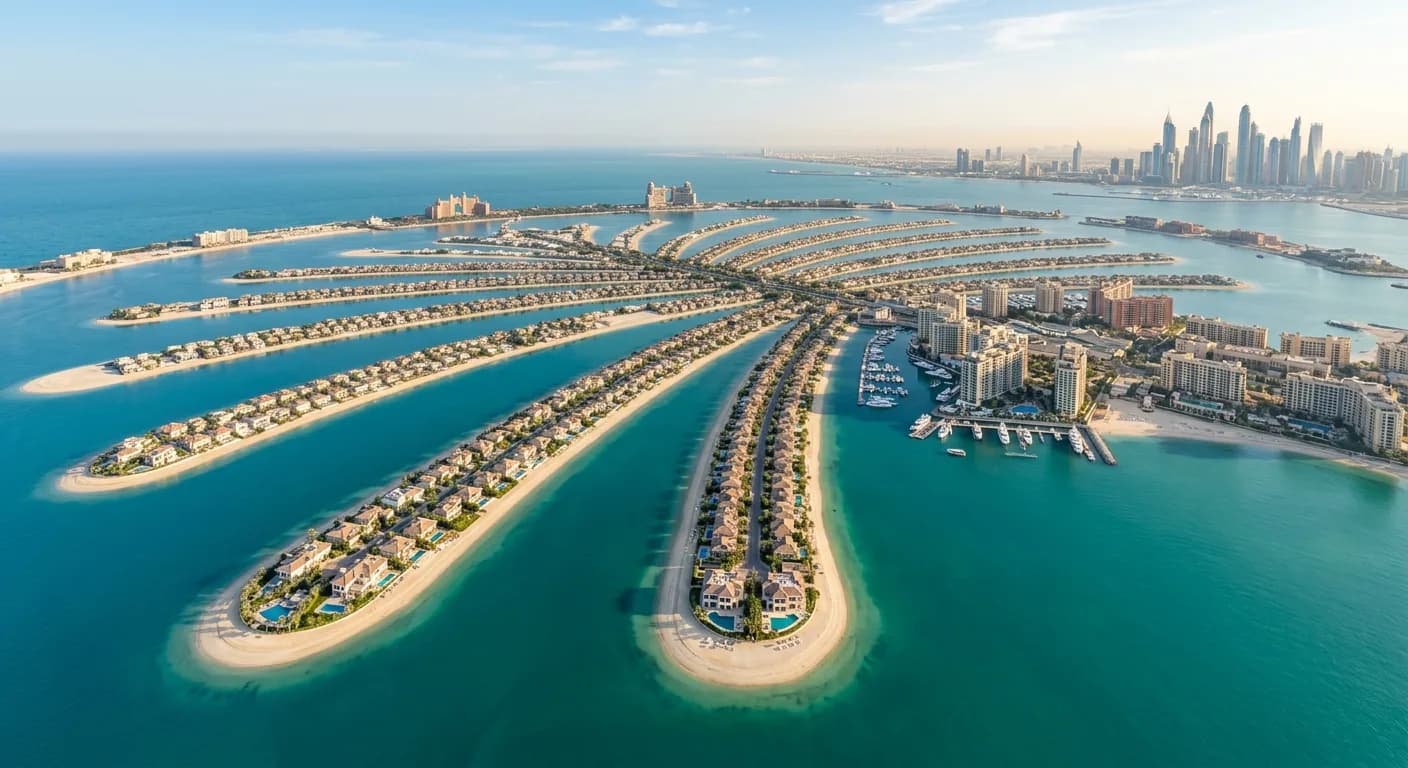
Developer Profile
Nakheel is Dubai's dominant waterfront master developer, wholly owned by the Dubai government, with 13 live off-plan projects across 9 districts.
What the current data says
Developer shortlist
Need the best-fit launches from this developer?
Data coverage
We publish what our pipeline can verify today. Gaps below are on the backlog.
Projects
13
13 tracked launches with Nakheel.
Areas
9
Active across 9 Dubai areas.
Price from
Price on request
Lowest tracked entry price from Nakheel.
Nakheel is the government-backed developer that physically created Dubai's coastline — Palm Jumeirah, Dubai Islands, Palm Jebel Ali — and continues building master-planned communities across 9 active districts. With 13 projects currently selling, concentration strongest in Meydan, Dubai Islands, and Al Merkadh, Nakheel offers buyers access to waterfront land, resort-branded apartments, and Crystal Lagoon villas at price points ranging from 600,000 AED for Palm Jebel Ali land plots to over 41,000,000 AED for premium frond villas. If waterfront access, government delivery certainty, and master-community infrastructure are your core criteria, Nakheel belongs on the selection. The decision then becomes which district and project type fits your capital horizon — and that choice is concrete once you match price tier to area fundamentals.
Nakheel was established under Dubai Holding and remains wholly owned by the Dubai government, which removes the counterparty risk that privately held developers carry through market cycles. The developer's portfolio spans more than 300 square kilometres of master-planned land across Dubai, including the creation of Palm Jumeirah — one of the largest man-made islands in the world — along with Jumeirah Islands, Al Furjan, Discovery Gardens, and Jumeirah Park. That record of delivering liveable, infrastructure-backed communities at city scale is the core proof point buyers should weigh before any project comparison.
Nakheel does not build isolated towers. It builds districts — complete with roads, utilities, retail, schools, and beach or lagoon access integrated into the master plan from the outset. The distinction matters because resale liquidity in established Nakheel communities has historically tracked broader city growth, not just individual building performance. Current active product spans 13 off-plan projects from compact apartments to multi-million-dirham frond villas, giving buyers genuine range across budget and product type without sacrificing the developer quality tier. For Dubai developers comparison purposes, Nakheel sits at the top of the government-backed tier alongside Emaar and Meraas, but its geographic holdings — particularly the Palm addresses and Dubai Islands frontage — are structurally irreplaceable.
Nine active districts define Nakheel's current footprint, reflecting two parallel strategies: consolidating iconic established addresses and opening new waterfront frontiers.
Dubai Islands carries Bay Villas and the Rixos Hotel and Resorts branded residences — 700 metres of beach, apartments from 2,600,000 AED, targeted at buyers who want a branded hospitality operator managing their asset. Meydan and Al Merkadh represent the highest project concentration in the current portfolio, anchored by District One Naya Residences and District One West, both positioned on Mohammed Bin Rashid City's Crystal Lagoon — the largest man-made lagoon swimming facility in the world and a genuine lifestyle differentiator in the 3,000,000–8,000,000 AED villa bracket.
Palm Jumeirah carries Como Residences, a 76-storey ultra-luxury tower targeting 2027 handover, alongside the Palm Gateway mixed-use redevelopment. These two projects serve buyers at opposite ends of the Palm market: Como is a high-concentration luxury play; Palm Gateway targets mid-market and transit-adjacent demand. Palm Jebel Ali extends Nakheel's frond villa typology to the second, larger palm, with villas from 2,500,000 AED and land plots from 600,000 AED — the only format that gives a buyer a titled frond plot to build on. Jumeirah Village Triangle (JVT) and Al Furjan add affordable-to-mid-market townhouse supply, rounding out a portfolio that operates across genuinely different buyer segments rather than concentrating risk in a single area or price band.
The 13 selling projects divide into three price tiers that map to distinct buyer profiles, and matching tier to objective is the fastest way to narrow the selection.
Entry tier — 600,000 to 2,500,000 AED: Palm Jebel Ali land plots attract investors building custom villas on titled frond plots. This format is structurally scarce; no competing developer holds a second palm island with undeveloped frond land for retail sale. Buyers in this tier are acquiring geographic irreplaceability rather than a finished product.
Mid-range — 2,500,000 to 8,000,000 AED: Bay Grove Residences on Dubai Islands and the District One series in Mohammed Bin Rashid City sit in this band. These are master-community purchases in areas with verified infrastructure spend behind them. District One Phase II Villas 2 represents the later-stage rollout of the Crystal Lagoon district, offering buyers a longer entry window at pricing that reflects a later delivery horizon.
Premium — 18,000,000 to 41,748,800 AED: Como Residences on Palm Jumeirah and Rixos-branded apartments on Dubai Islands target luxury buyers requiring ultra-branded waterfront addresses with operator-managed rental infrastructure. At this tier, the Rixos flag carries direct short-term rental yield logic; Como competes on architectural scarcity at the Palm's highest building.
All projects run DLD RERA-compliant construction-linked payment plans, meaning funds disburse against verified build milestones, not developer-set schedules. fee structures range from 1% to 5% depending on project and negotiation — this is standard across the Dubai off-plan market and does not differentiate between Nakheel projects specifically.
Nakheel's active launch calendar clusters handovers between 2025 and 2027, with specific dates varying by project phase and district readiness.
Palm Jebel Ali villa handovers begin from 2027. The master island infrastructure — bridges, utilities, trunk roads — is funded under government commitment, and Palm Jebel Ali construction progress has been publicly trackable since 2023 recommencement. Como Residences on Palm Jumeirah targets 2027 completion. The 76-storey structural build is the critical path variable; buyers at this price point should verify construction stage at time of purchase.
District One Naya Residences sits within Mohammed Bin Rashid City's phased delivery structure, aligned to current construction milestones and the Crystal Lagoon district's broader infrastructure calendar. Bay Grove Residences and Bay Villas on Dubai Islands target completion within the 2025–2027 window, with Dubai Islands master infrastructure — access roads, beach facilities, utilities — progressing under the same government-controlled budget that delivered Palm Jumeirah's original foundations.
District One Phase II Villas 2 is positioned as a later-phase asset in the District One masterplan, appropriate for buyers with a three-to-five year capital horizon who want Crystal Lagoon frontage at a lower entry point than Phase I resales currently command.
Buyers sensitive to construction risk should note that Nakheel operates DLD-mandated escrow accounts and, as a government-linked entity, carries structurally lower distress risk than private developers during market contractions. That said, government ownership does not override project-specific timelines. Verify handover dates against current DLD filings before committing to a specific completion assumption.
Against Emaar, the most direct peer by scale, Nakheel's differentiating edge is coastline and lagoon-fronted supply. Emaar delivers strong Downtown, Creek Harbour, and golf-community inventory, but does not hold Palm or Islands geography. Where Emaar competes on integrated urban density and branded hotels in tower podiums, Nakheel competes on geographic irreplaceability — Palm Jumeirah frond land cannot be created again, and Dubai Islands beach frontage is physically finite.
Against Meraas, the contrast is scale versus curation. Meraas builds premium boutique districts — City Walk, Bluewaters, Port de La Mer — with a tighter product count and stronger lifestyle-retail integration at the building level. Nakheel builds master communities measured in square kilometres. Meraas commands premium per-square-foot pricing in its contained zones; Nakheel controls the total supply dynamic across multiple major waterfront addresses simultaneously.
For buyers evaluating luxury off-plan at 20,000,000 AED and above, the choice between Nakheel and Emaar typically reduces to waterfront typology: Nakheel's fronds and island beaches versus Emaar's Downtown and Creek Harbour urban positioning. These are not substitutes — they serve different tenant and buyer profiles at resale.
At mid-market 2,500,000–8,000,000 AED, Nakheel's master-community townhouses in Al Furjan, Jumeirah Village Triangle (JVT), and Jumeirah Park compete on community infrastructure depth and documented resale history — two metrics where the developer's age and delivery volume give it a factual advantage over newer private developers entering the same bracket.
The single consideration that should give buyers pause: Nakheel's larger master developments carry longer infrastructure timelines. Buyers requiring delivery inside 24 months should verify individual project schedules directly rather than treating government ownership as a proxy for fast delivery.
Nakheel is wholly owned by the Dubai government through Dubai Holding, which eliminates the insolvency risk that affects private developers. All off-plan projects operate under DLD-mandated escrow accounts, meaning buyer funds are released against verified construction milestones rather than on developer discretion. For investors prioritising delivery certainty over maximum return, Nakheel's government ownership is a structural advantage, not a marketing claim. The caveat: government backing does not guarantee a specific handover date, so buyers should verify individual project schedules rather than relying on developer status alone.
Palm Jebel Ali land plots start from 600,000 AED, the lowest-entry Nakheel product currently selling and the only format that lets a buyer build a custom villa on a titled frond plot — a typology unavailable from most competing developers. For buyers wanting built product, [District One Naya Residences](/projects/district-one-naya-residences) and [Bay Grove Residences](/projects/bay-grove-residences) sit in the 2,500,000–5,000,000 AED band with Crystal Lagoon and Dubai Islands waterfront access respectively. Como Residences on [Palm Jumeirah](/areas/palm-jumeirah) and Rixos Dubai Islands begin at 18,000,000 AED and are appropriate only for buyers targeting the ultra-prime resale and short-term rental market.
District One in Mohammed Bin Rashid City delivers Crystal Lagoon waterfront at lower absolute prices than [Palm Jumeirah](/areas/palm-jumeirah), with stronger capital growth potential from an area still in active infrastructure build-out. Palm Jumeirah carries a premium for a completed global address, a higher short-term rental ceiling, and the scarcity of frond and beachfront land that cannot be replicated. Buyers prioritising current yield and established resale liquidity favour Palm Jumeirah. Buyers accepting a two-to-four year appreciation thesis and a lower entry cost favour District One. The two areas serve different capital profiles and are rarely interchangeable on the same selection.
Showing 12 of 13 tracked launches for Nakheel, ordered by strongest districts first.

by Nakheel
Starting from
AED 2.5M

by Nakheel
Starting from
AED 3.05M

by Nakheel
Starting from
AED 3.5M

by Nakheel
Starting from
AED 3.57M

by Nakheel
Starting from
AED 53.2M

by Nakheel
Starting from
AED 4.8M

by Nakheel
Starting from
Price on request

by Nakheel
Starting from
AED 8M

by Nakheel
Starting from
AED 28.1M

by Nakheel
Starting from
AED 40.5M

by Nakheel
Starting from
AED 686K

by Nakheel
Starting from
AED 2.6M